| English | Japanese |
|
|
Yesterdays access |
| Page Top | [Lily Diary.】 A diary of life in Mindanao. |
| 26/05/21 | JTDX Auto Run BUGFIX |
| 26/05/17 | Repair of satellite antenna system |
| 26/05/13 | Repair of Alinco DR130 |
| 26/05/07 | Making a Repeater Controller Pert3 |
| 26/05/03 | Indonesian satellite friend YC8RPK |
| 26/04/26 | DXCC200 achieved |
| 26/04/23 | Communication via ISS voice repeater |
| 26/04/20 | WSJT-X Auto Run Ver0.1.5 |
| 26/04/19 | Got an Alinco DR-130 |
| 26/04/15 | Clublog Charts |
| 26/04/10 | Regarding POC transceivers |
| 26/04/08 | Using KENWOOD AT-300 with YAESU radio |
| 26/03/17 | How to establish a radio club in the Philippines |
| 26/03/10 | KENWOOD AT-300 with YAESU radio |
| 26/02/27 | Philippine NTC Amateur Radio License Examination Question Bank |
| 26/02/20 | Package received from JK1SNS |
| 26/02/18 | Temporary License Renewal |
| 26/02/14 | Satellite Tracking Software SatTrack |
| 26/02/05 | Making a Repeater Controller Pert2 |
| 26/02/02 | CQ on satellite IO-86 |
| 26/01/27 | Shack & Repeater Controller |
| 26/01/16 | Making a Repeater Controller |
| 26/01/16 | Making aRotator Interface PCB |
| 26/01/10 | Satellite antenna installation |
| 26/01/08 | WSJT-X Remote Operation |
| 26/01/07 | JTDX Remote Operation |
| 26/01/04 | log_reciver_Ver2.6.6 |
| 26/01/04 | Tailscale VPN software for JTDX_Remote |
| Online Multiple Choice Reviewers to the Phil Amateur Radio Examination by 4F3EW A joint project by JI1FGX/DU9 and DV9JRD |
| Making a Repeater Controller Pert3 (2026/05/07) | ||||||||||||||||||||||||||||||||||||||
|---|---|---|---|---|---|---|---|---|---|---|---|---|---|---|---|---|---|---|---|---|---|---|---|---|---|---|---|---|---|---|---|---|---|---|---|---|---|---|
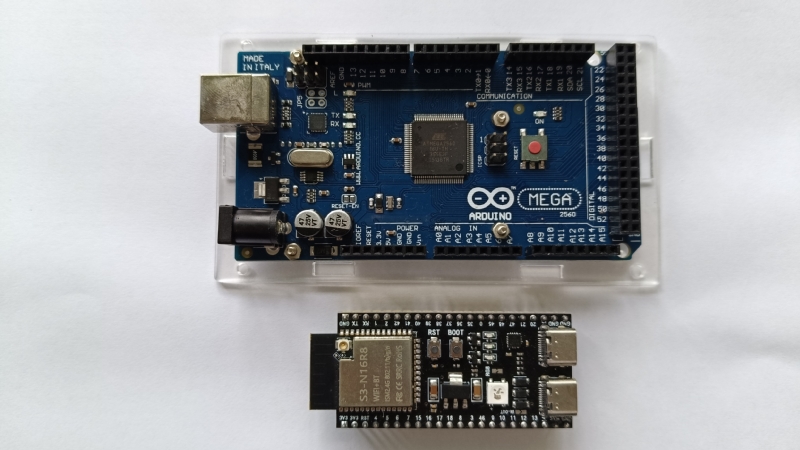
| I am working on it.Repeater controller.The microcontroller (MCU) of...Adruin Mega 2560 Rev3.from.ESP32-S3.I changed it to [this]. The size is about a quarter of the original, and the price has dropped from 849 pesos (2250 yen) to 340 pesos (900 yen). The processing power of the ATmega2560 and the ESP32-S3 are worlds apart.
 |
||||||||||||||||||||||||||||||||||||||
This is the analog mixer and VOX circuit I ordered from JLCPCB.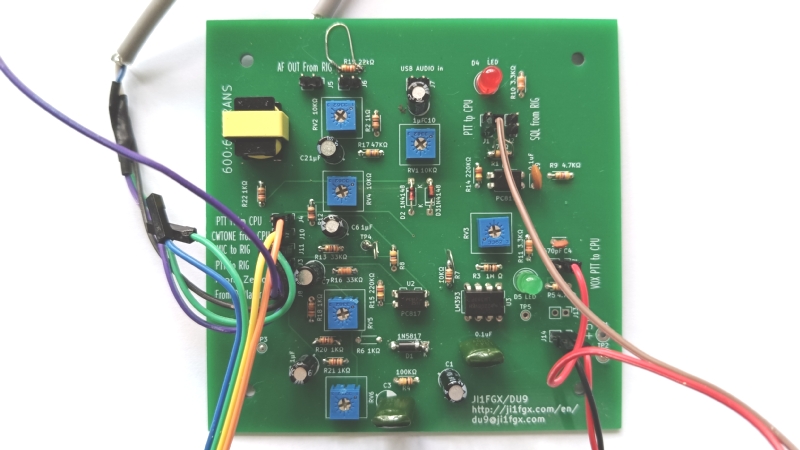 |
||||||||||||||||||||||||||||||||||||||
| A circuit board to be mounted on top of the Mega2560. The DFPlayer MP3 player for voice ID is mounted on the right side. The RTC DS3231 module will be mounted on the left side. The RTC is used to control the transmission timing of the voice ID and CW ID. 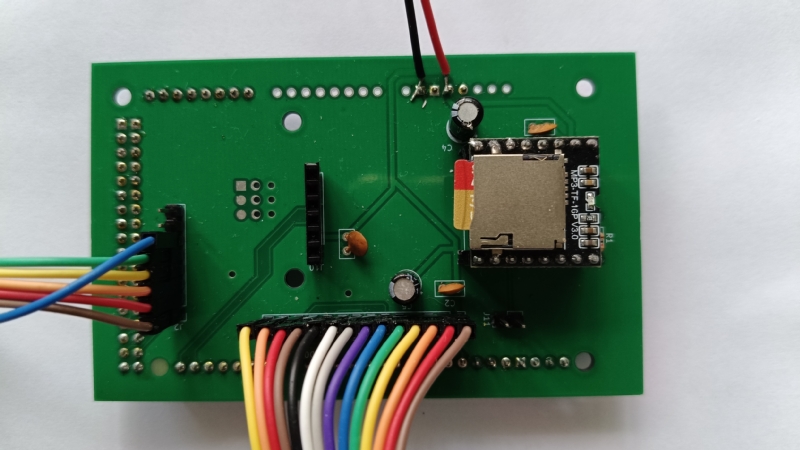 |
||||||||||||||||||||||||||||||||||||||
Despite its small size, the ESP32-S3 supports both Wi-Fi and Bluetooth.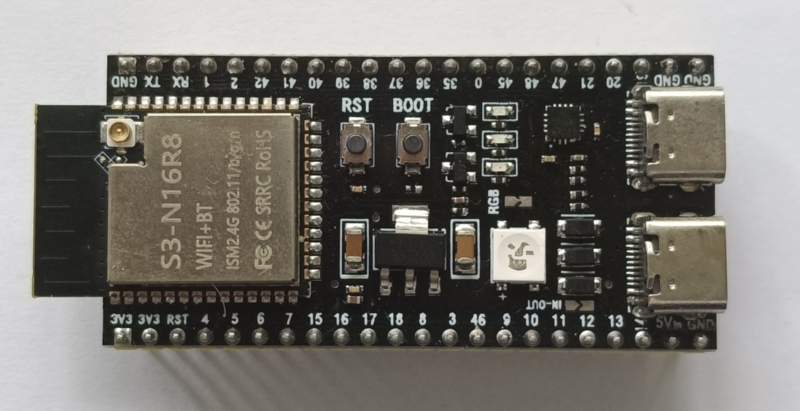 |
||||||||||||||||||||||||||||||||||||||
| I spent two days porting the software from the Mega2560 to the ESP32-S3. Furthermore, the configuration programs I've created using Python up until now have been done via USB connection. I made it so that you can connect via Wi-Fi and configure it from both your PC and smartphone. I'm about to start designing the circuit board, and I'm planning to combine the analog board and the MCP digital board into a single board. 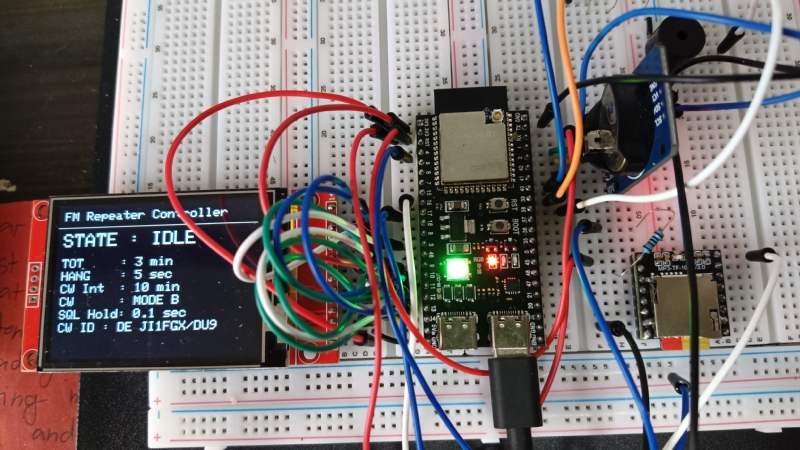 |
||||||||||||||||||||||||||||||||||||||
| You can now configure repeater settings using your smartphone. Wi-Fi can connect to existing networks or function as an access point. 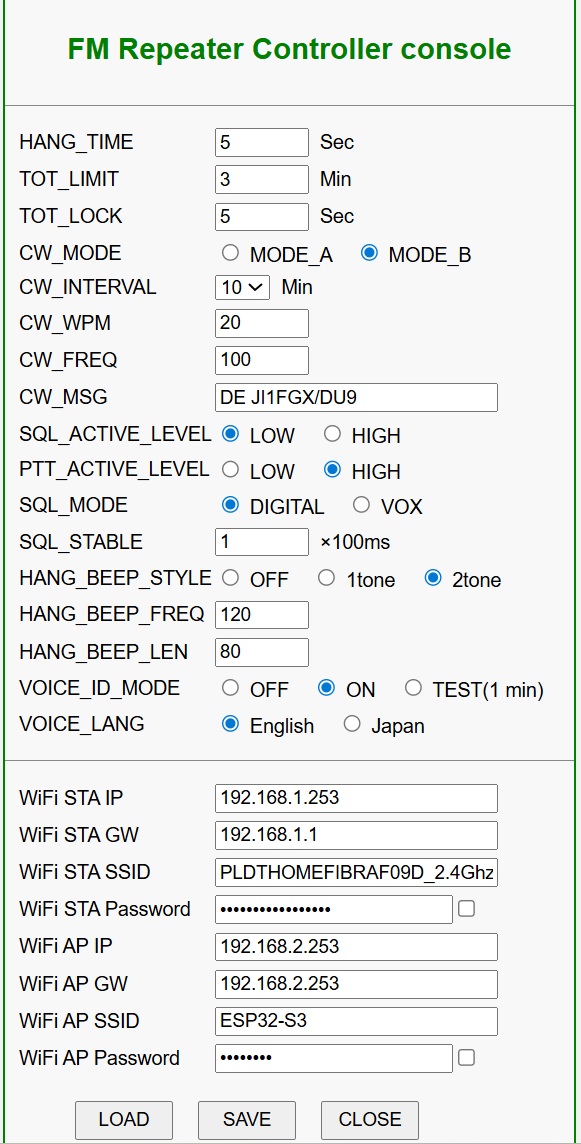 |
||||||||||||||||||||||||||||||||||||||
| May 3, 2026. May 13, 2026. | ||||||||||||||||||||||||||||||||||||||